‘The most exciting Thomas Cromwell discovery in a generation – if not more’
Dr Tracy Borman
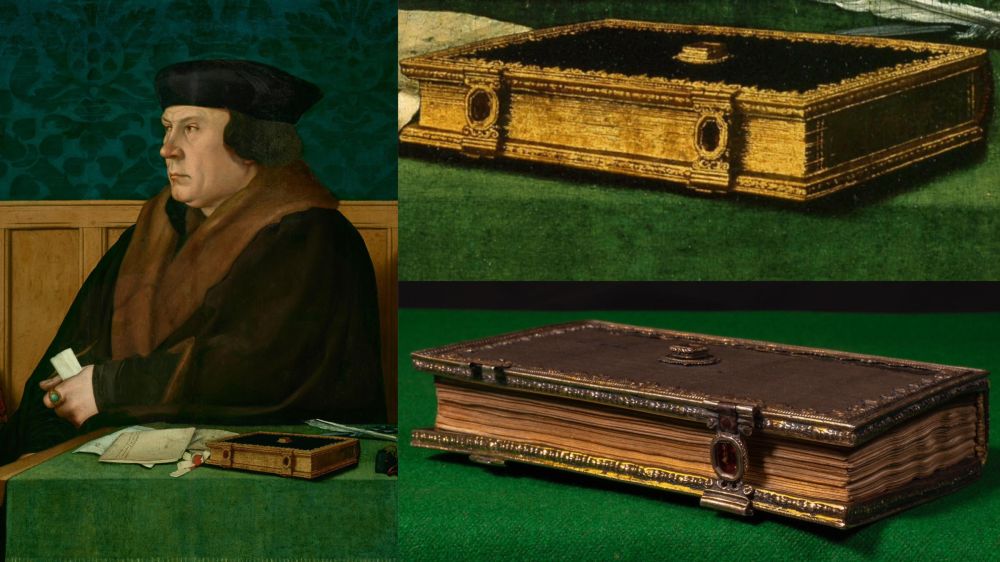
Detail of the painted book (top right) and the book today (bottom right) © Trinity College, Cambridge.
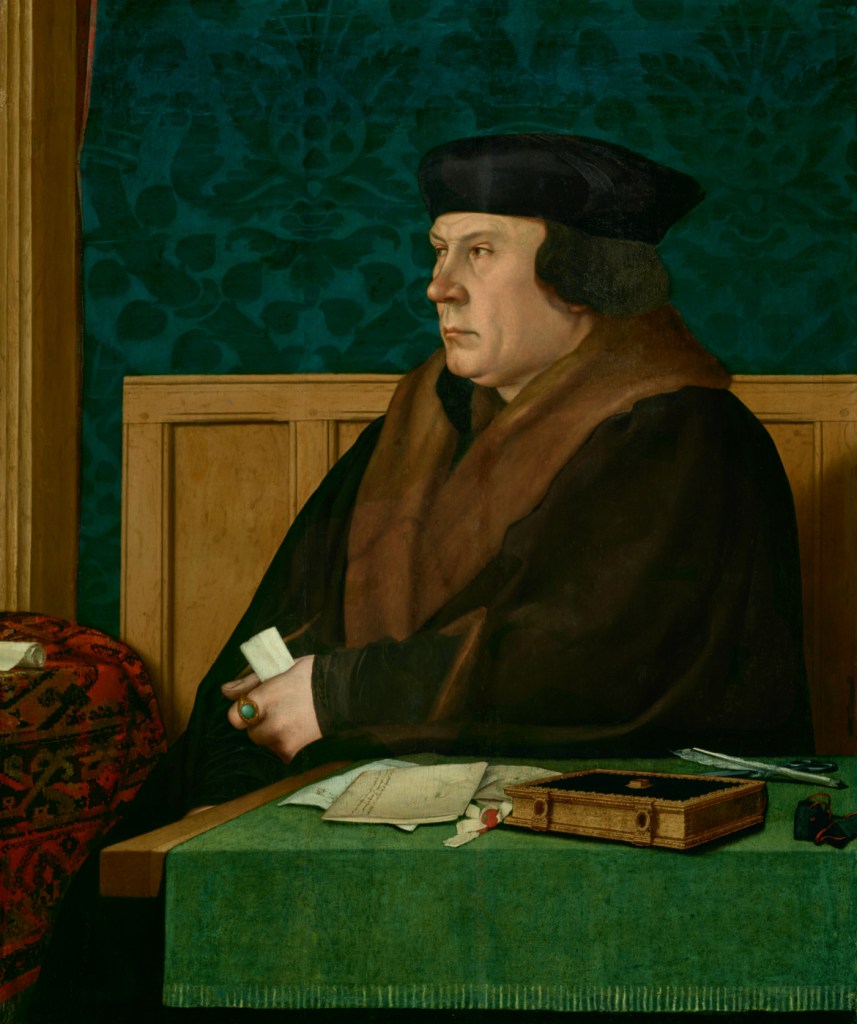
Over the past year, I have been part of an amazing team at Hever Castle who have worked to confirm a holy grail of the Tudor world: the discovery of an extant object that can be seen depicted in a Tudor portrait. As a scion-project from Kate McCaffrey’s ongoing and celebrated research into Books of Hours, the curatorial team at Hever Castle can now verify that a Book of Hours held at The Wren Library, Cambridge, is the same book displayed in the painting by Hans Holbein the Younger of Thomas Cromwell, King Henry VIII’s chief minister. Bound intricately in silver gilt, and set with garnets, the book was printed in Paris by Germain Hardouyn in 1527. Its links to Cromwell and Holbein’s portrait were previously unknown.
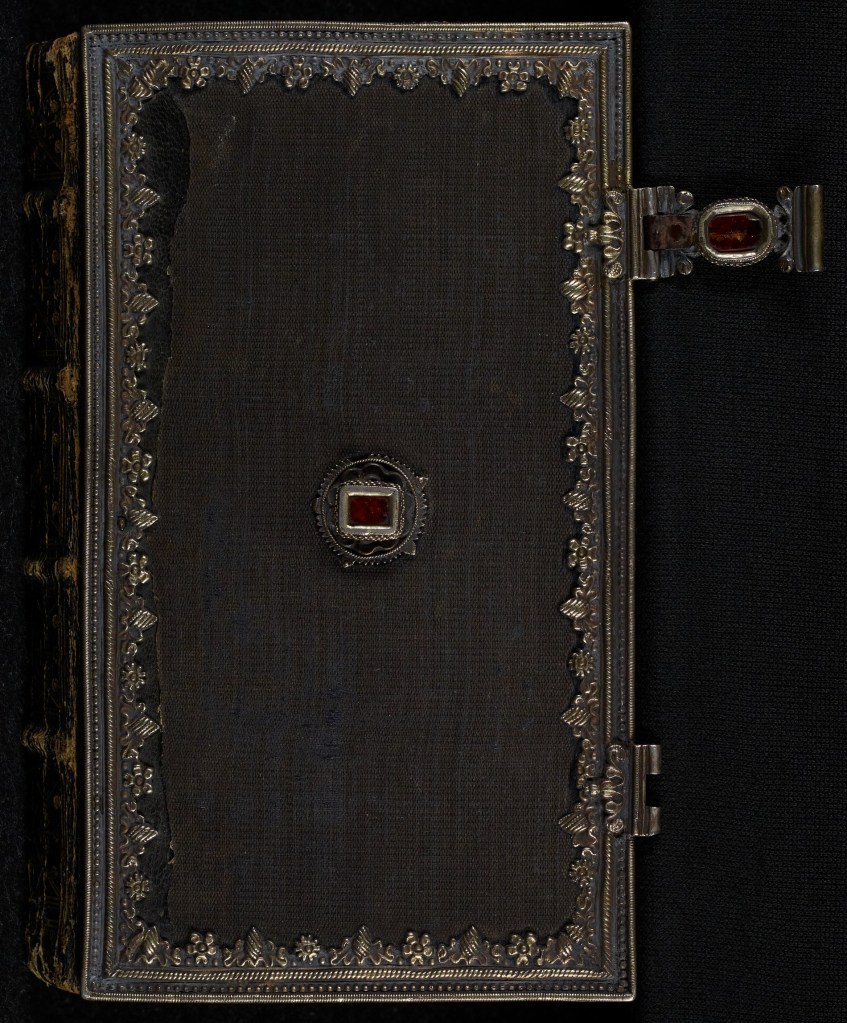
Hever’s Curator, Alison Palmer, observed Holbein’s portrait of Cromwell and, having just viewed the Wren book at Cambridge, she instantly recognised its uncanny similarity to the book in the painting. With this tantalising visual clue, Hever Castle’s Assistant Curator, Kate McCaffrey, and I researched the book’s early provenance.
The Wren book was donated in 1660 to Trinity by Anne Sadleir, married to Sir Ralph Sadleir: grandson of Ralph Sadler, Cromwell’s protégé. In Cromwell’s will, we found he had gifted all his books to Ralph Sadler, and in an inventory taken in 1623 of Sadler’s manor of Standon, we found a ‘gilt psalm’ book detailed. We also investigated the garnet stones set on the binding and established that they featured in Cromwell’s inventories.
With a firm provenance trail back to Cromwell, we turned to experts in binding and silverwork for dating. The book’s spine is an eighteenth-century replacement, and the gilt and velvet pile of the cover has worn away. Still, a conservation report confirmed the presence of dark blue velvet and the remnants of gilt. As Ralph Sadler had owned a copy of Holbein’s portrait of Cromwell (likely the version in The Frick), we couldn’t rule out the binding being a later addition in the style of the book in Holbein’s painting. However, hallmarks were discovered on the silver gilt by Dr David Pearson, and Dr Murray Stewart of Cambridge suggested they were Parisian.
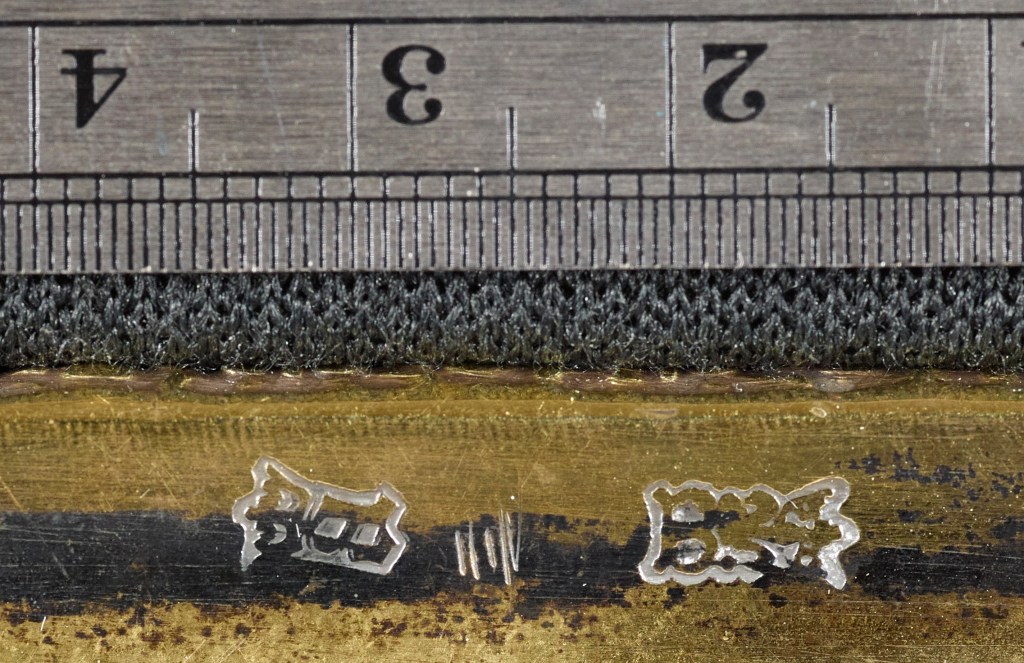
This fact was established by Dr Kirstin Kennedy from the V&A and then verified by Dr Michèle Bimbent-Privat of The Louvre. Indeed, the binding dates to between December 1529 – December 1530 and was created by Pierre Mangot, goldsmith to King Francis I of France. Mangot originated from Blois, where a young Anne Boleyn had often resided in the train of Queen Claude of France. Originally working for Louise of Savoy, Mangot moved to Paris in 1528 and became the Royal Goldsmith to King Francis I. Tantalisingly, just a few short months after Mangot completed the silver-gilt binding on Cromwell’s Book of Hours, he created a goldwork chain, commissioned by King Francis for George Boleyn, brother of Anne.
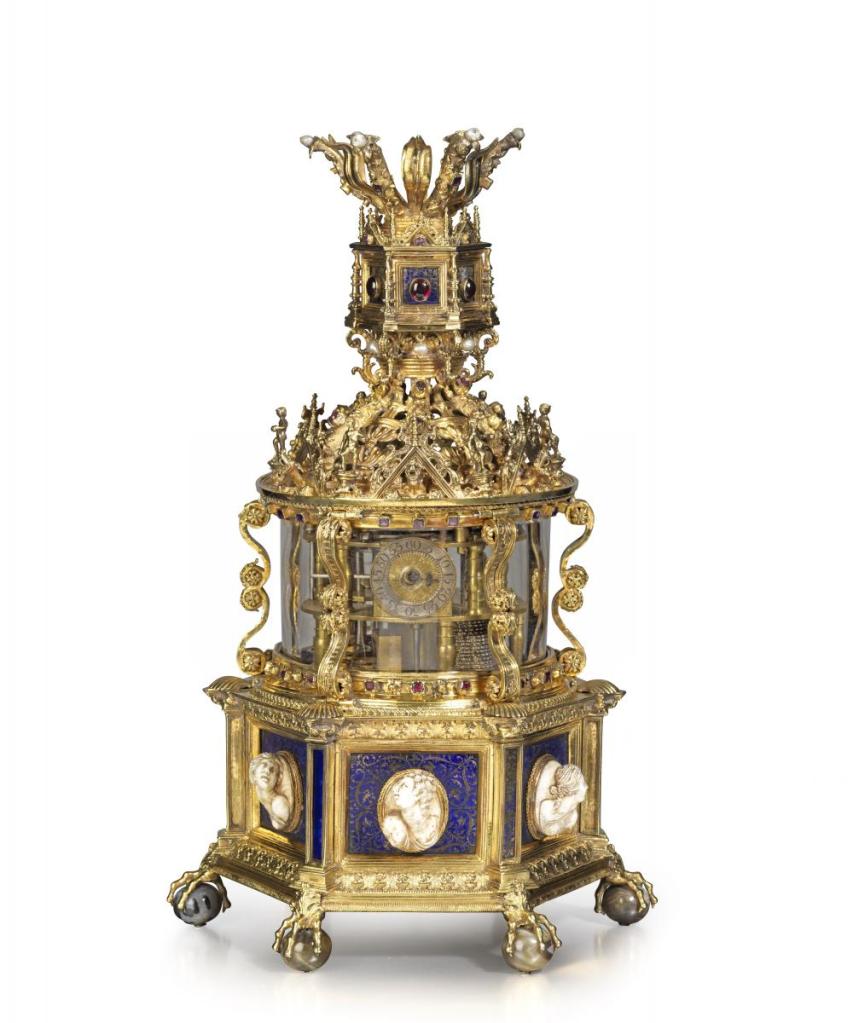
Based on a note in the front of the book, the gems on the covers and clasps were thought to be jaspers or jacinths, but analysis by Joanna Symonowicz, a doctoral researcher working with Dr Giuliana Di Martino in the University of Cambridge’s Department of Material Science, used Raman spectroscopy to identify them as grossular garnets.
Kate McCaffrey’s ground-breaking MA research had established that Queens Catherine of Aragon and Anne Boleyn both owned copies from the 1527 batch of Hours printed by Hardouyn. In addition, we can now confirm that a third copy was owned by Thomas Cromwell: the man who would not only ensure the crown was removed from Catherine’s head and placed on Anne’s but who would ultimately orchestrate both queens’ downfalls.
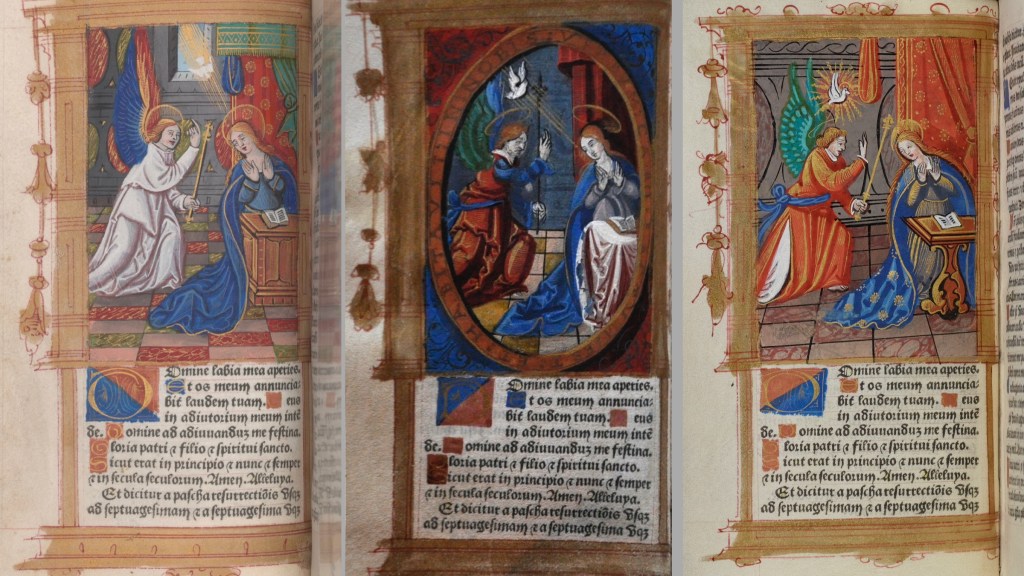
© The Morgan Library, © Hever Castle & Gardens © Trinity College, Cambridge.
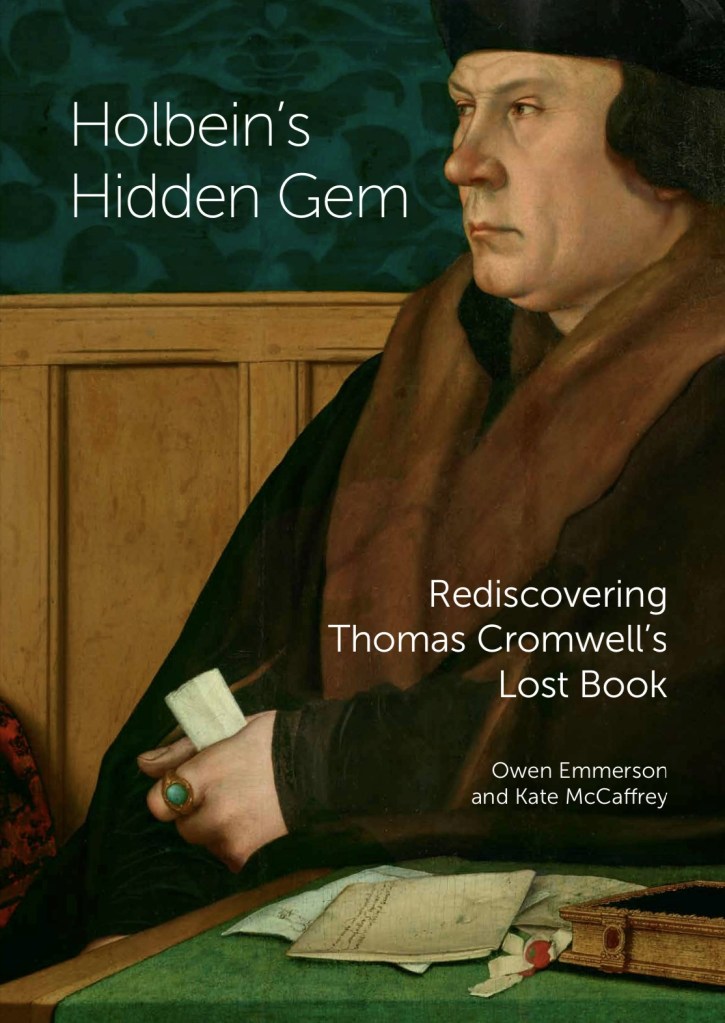
Thomas Cromwell’s Book of Hours will be displayed alongside Anne Boleyn’s twin-like copy at Hever Caste, until 10th Nov 2023. You can find our more about our discovery in the book I have co-authored with Kate McCaffrey, entitled Holbein’s Hidden Gem: Rediscovering Thomas Cromwell’s Lost Book, available exclusively from the Hever Castle Shop.
 Dr Owen Emmerson