Monday 12th January, 2026
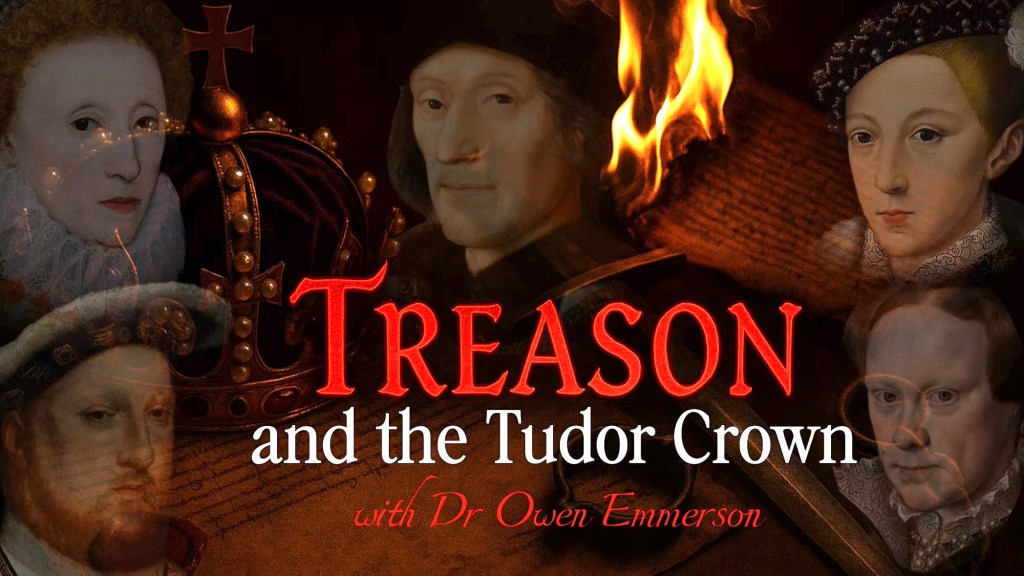


Join Dr Owen Emmerson to explore how the Tudors redefined treason – where faith, power, and survival collided in deadly drama.
This week-long online event, taking place from Monday, 12th January 2026, offers a unique opportunity to explore the fascinating world of Tudor Treason.
At the end of the course, I’ll host a live Q&A so we can discuss your questions and Tudor Treason together!
Plus, all participants will get access to four additional courses: Holbein with Dr Owen Emmerson series (six lectures); Six Queens in Art lecture series (six lectures); Thomas Cromwell: Beyond Wolf Hall (six lectures), and the 2023 Hidden History of Hever Castle lecture series (seven lectures). That’s 25 free lectures!
Don’t miss out on this virtual event that promises to go beyond what you already know about The Tudors.
Mark your calendar and join me online for Treason and the Tudor Crown on January 12th, 2026!
What Is Included?
- Six pre-recorded, 30-minute lectures by Dr Owen Emmerson.
- Access to all lectures for two months from the upload date.
- A live Zoom with Dr Owen Emmerson, who will answer your questions.
- Plus exclusive access to the 2025 Holbein with Dr Owen Emmerson series (six lectures); Six Queens in Art lecture series (six lectures); Thomas Cromwell: Beyond Wolf Hall (six lectures), and the 2023 Hidden History of Hever Castle lecture series (seven lectures).
COST: £30.00 per person, plus booking fee.
Concessions
I am pleased to offer discounted concessionary price places for carers, senior citizens, NHS workers, students, recipients of Universal Credit, and for those who are unwaged. Please contact me at the below email address to receive a discount code.
Lecture Schedule
Monday, 12th January 2026
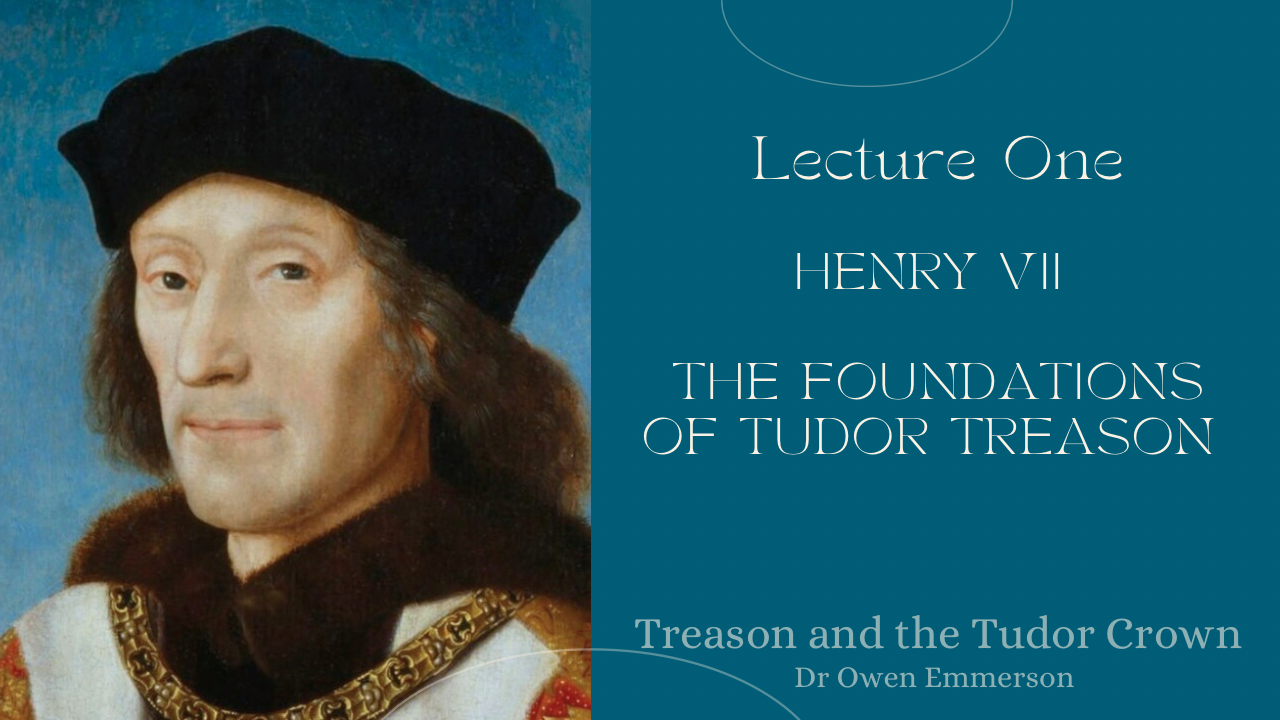
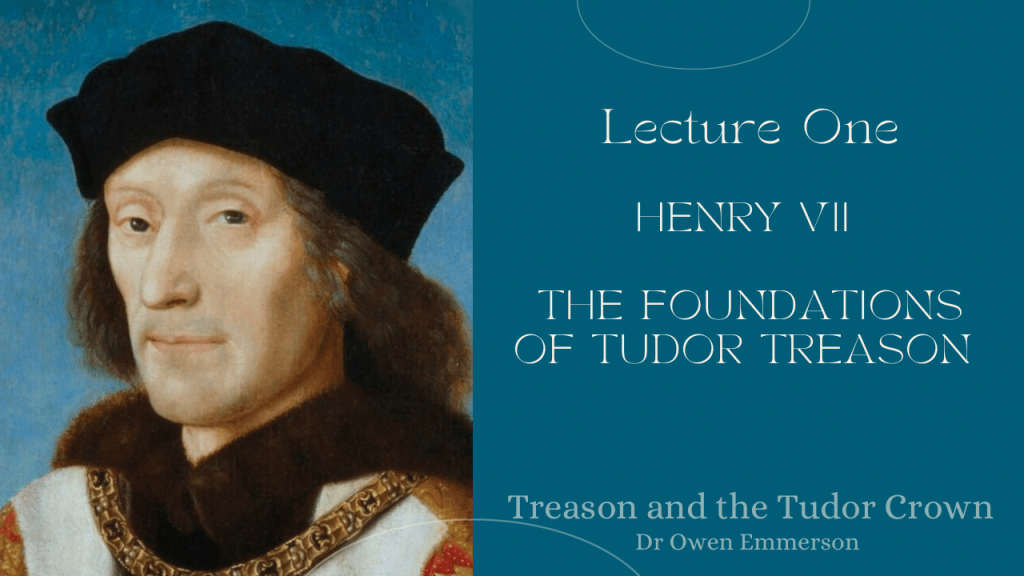
Lecture 1: Henry VII — The Foundations of Tudor Treason
Henry VII inherited a fractured kingdom and ruled by turning treason into an instrument of control. This lecture explores how he used the law to stabilise his new dynasty after the Wars of the Roses, transforming rebellion into a personal offence against the crown. We’ll examine how attainders, forfeitures, and the 1495 Treason Act defined loyalty in practical terms: obedience to the monarch in power, regardless of legitimacy. Through figures like John de la Pole, Perkin Warbeck, and Sir William Stanley, we’ll see how Henry combined justice and intimidation to end a century of dynastic uncertainty. Under his cautious rule, treason became a legal mechanism for survival, not yet a weapon of ideology.
Tuesday, 13th January 2026
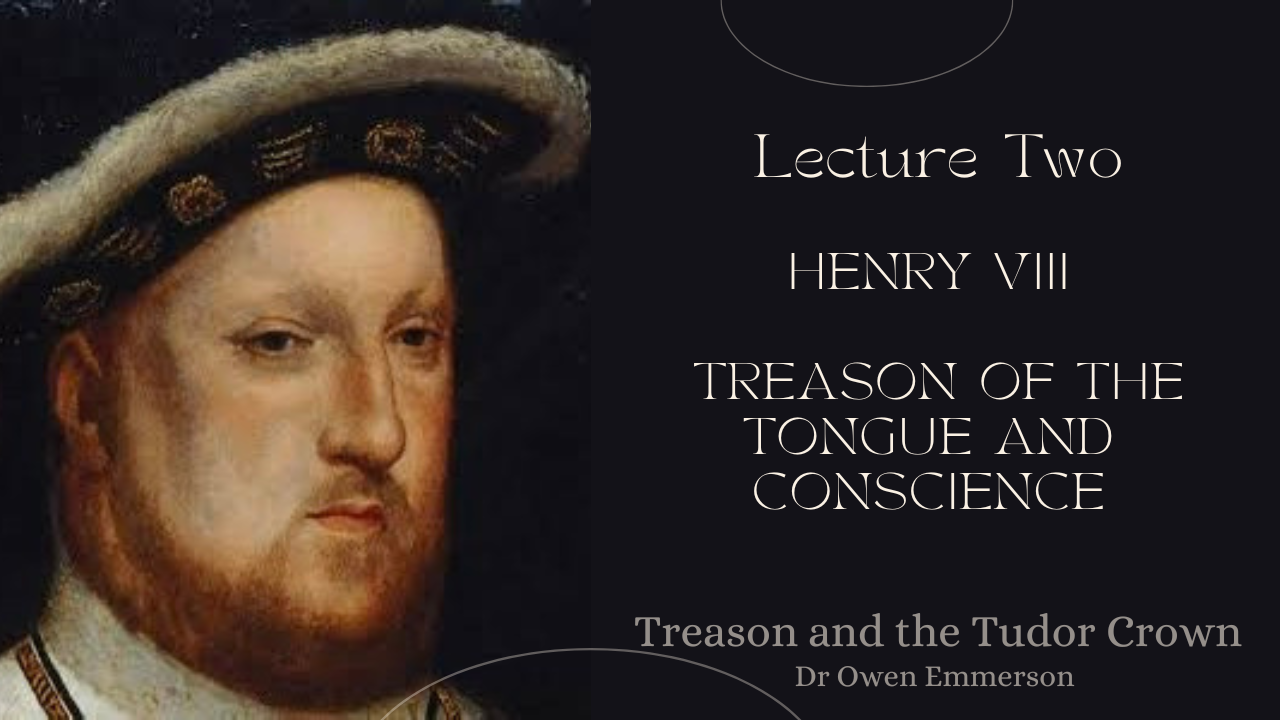
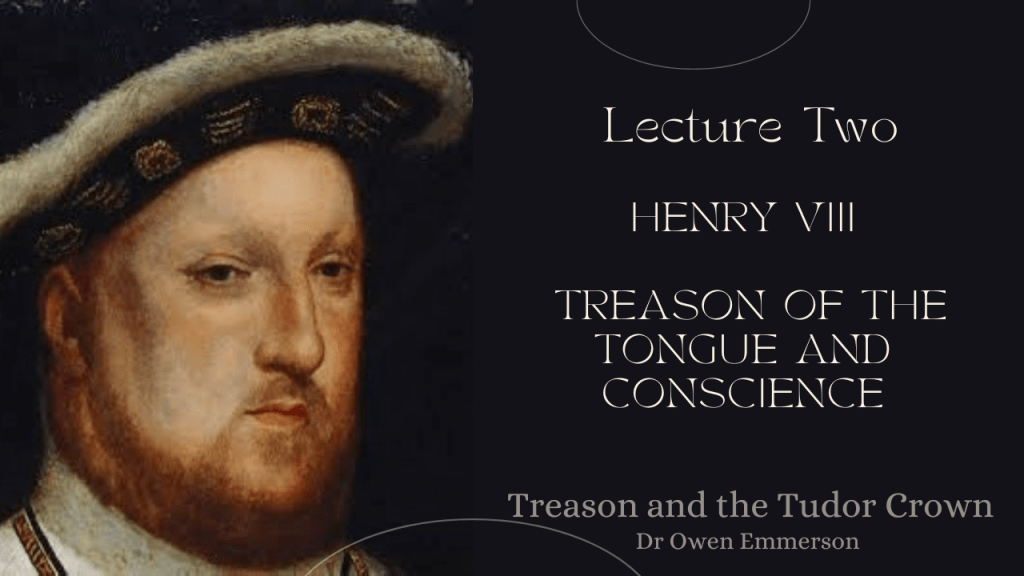
Lecture 2: Henry VIII — Treason of the Tongue and Conscience
Henry VIII redefined treason as a crime of thought. With the break from Rome, his supremacy as head of the Church of England expanded the scope of disloyalty to include private belief and spoken word. This lecture examines how the 1534 and 1536 Treasons Acts transformed silence, hesitation, or doubt into capital offences. We’ll explore how Henry’s most loyal servants—Thomas More, John Fisher, Anne Boleyn, and Thomas Cromwell—fell victim to the laws they once upheld. The king’s will became the measure of law, and treason evolved from political rebellion into spiritual disobedience. Under Henry, to oppose the monarch’s conscience was to threaten the state itself.
Wednesday, 14th January 2026
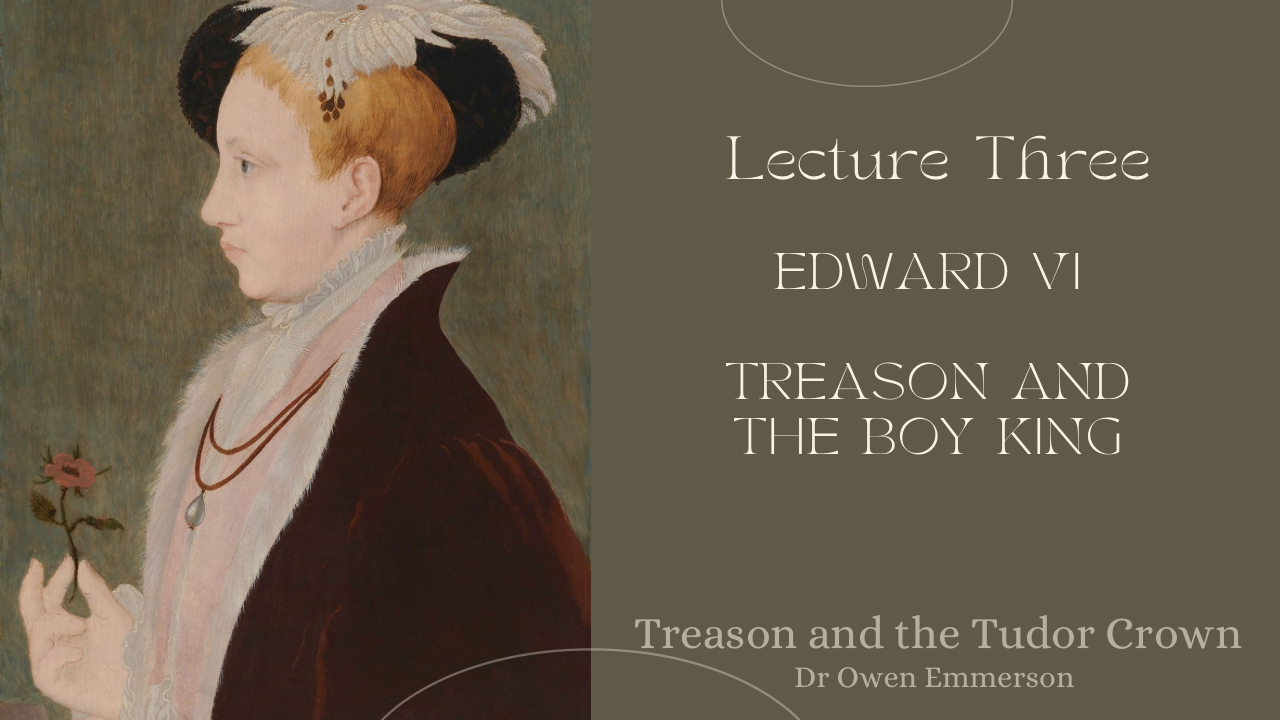
Lecture 3: Edward VI — Treason in a Kingdom Without a King
Under the boy king Edward VI, treason became the weapon of councillors, not monarchs. This lecture looks at how the regency government, lacking a strong sovereign, turned accusations of treason into tools of factional rivalry. The early repeal of Henry’s harsh statutes briefly promised reform, but ambition soon revived their use. We’ll trace the downfalls of Edward Seymour, Duke of Somerset, and John Dudley, Duke of Northumberland, both undone by shifting alliances and accusations of betrayal. Treason under Edward was less ideological and more pragmatic: a reflection of the instability that arises when power is wielded in the king’s name but not by his hand.

Thursday, 15th January 2026
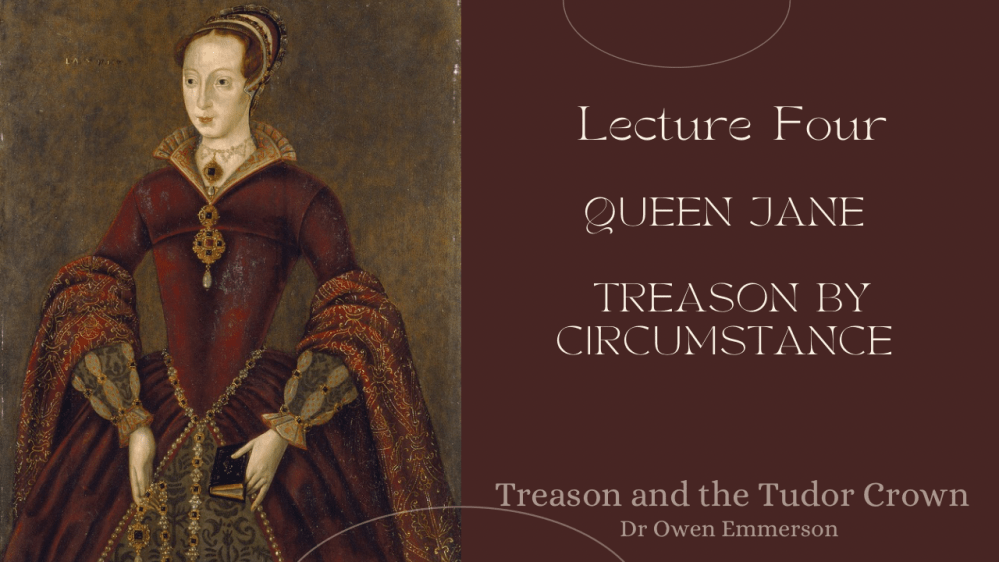
Lecture 4: Queen Jane — Treason by Circumstance (1553)
Lady Jane Grey’s nine-day reign captures the moment when loyalty itself became treasonous. Chosen by Edward VI and manipulated by the Duke of Northumberland, Jane’s claim to the throne was built on legal ingenuity and political desperation. This lecture examines how Edward’s “Devise for the Succession” blurred the lines between lawful obedience and usurpation, making Jane both a monarch and a traitor. Her trial and execution, alongside those of Guildford Dudley and Northumberland, reveal how quickly allegiance could shift from crown to crime. In Jane’s final days, we see a new moral dimension to treason: her calm faith and acceptance of death transformed the act from rebellion into tragedy, marking a rare moment when conscience eclipsed ambition in Tudor politics
Friday, 16th January 2026
Lecture 5: Mary I — Treason, Faith, and the Spanish Marriage
Mary I’s reign reconnected treason and heresy, redefining loyalty through religion. This lecture explores how England’s first queen regnant used treason laws to defend both her crown and her conscience. The 1554 Wyatt’s Rebellion, sparked by opposition to her marriage with Philip of Spain, tested the boundaries of obedience to a female monarch. We’ll trace the downfall of Lady Jane Grey as a lingering symbol of Protestant legitimacy, and Mary’s decision to spare Elizabeth Tudor—for a time—as a calculated act of mercy. Under Mary, treason became a spiritual betrayal as well as a political one: resistance to her was resistance to God’s will restored.

Saturday, 17th January 2026
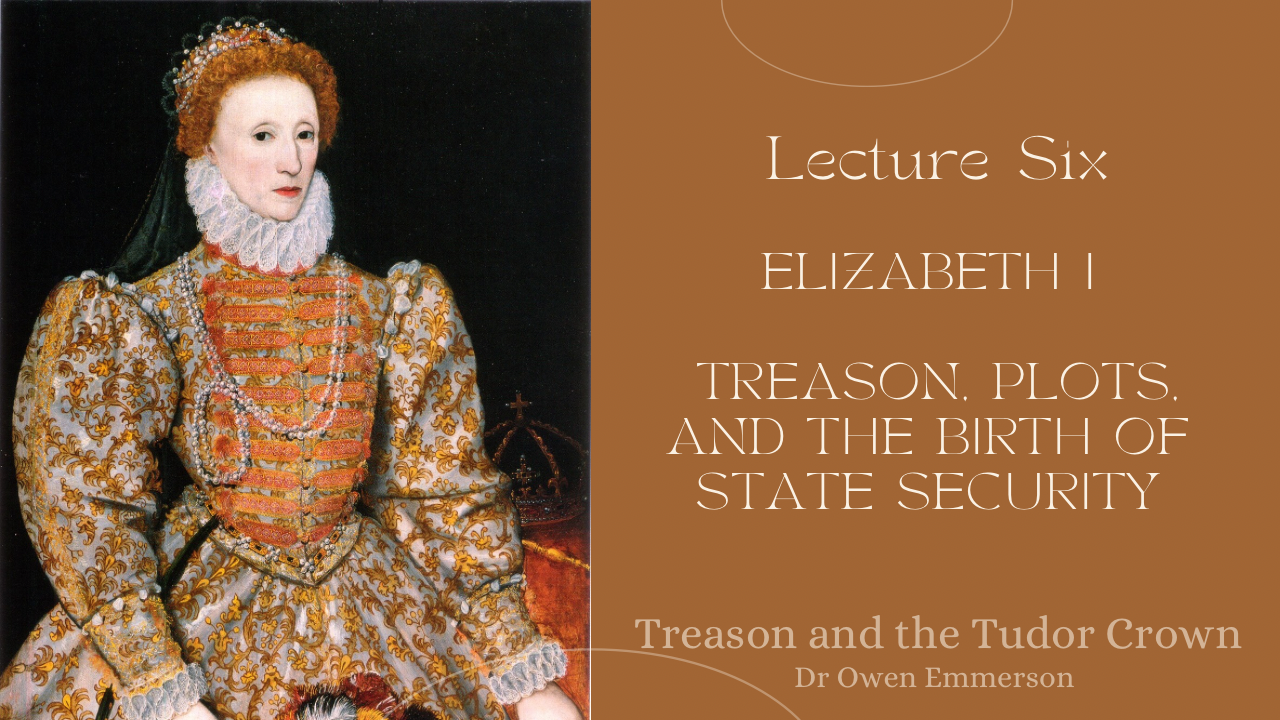
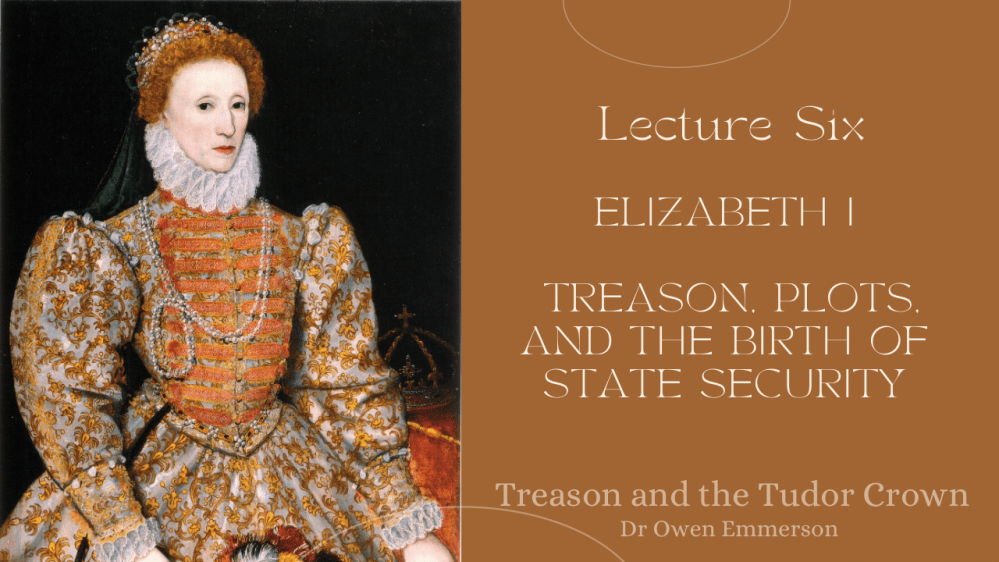
Lecture 6: Elizabeth I — Treason, Plots, and the Birth of State Security
By Elizabeth’s reign, treason had evolved into a weapon of the modern state. The Protestant queen faced relentless threats—from papal excommunication to assassination plots—and her government developed an intelligence network to detect dissent. This lecture examines the 1571 Treasons Act and later statutes that expanded guilt to words, letters, and associations. Through the cases of Mary, Queen of Scots, Francis Throckmorton, and Anthony Babington, we’ll see how espionage, surveillance, and coded correspondence reshaped the idea of loyalty. Under Elizabeth, treason became synonymous with subversion, signalling a shift from personal monarchy to institutional statecraft.
Sunday, 18th August 2025
Join Dr Owen Emmerson for a live Zoom Q&A.
Two Zoom sessions will be held to ensure that all participants have an opportunity to attend this live component:
Session 1:Sunday, 18th January 2026 at 09:00hrs GMT
Session 2:Sunday, 18th January 2026 at 21:00hrs GMT
Questions can be submitted in advance or asked during the session. Attendees will receive a recording of these live Zoom sessions.
Course Contributor
Dr Owen Emmerson

Dr Owen Emmerson is a social and cultural historian, author, and consultant. He is part of the curatorial team at Hever Castle, Anne Boleyn’s childhood home. In 2024, he worked as one of the historical consultants for the BBC adaptation of Dame Hilary Mantel’s Wolf Hall: The Mirror and the Light. Emmerson was part of the research teams that identified the Book of Hours captured in Hans Holbein the Younger’s portrait of Thomas Cromwell in 2023 and a miniature portrait of Queen Mary I as Princess by Suzannah Horenbout in 2024. He is the co-author of five books and has contributed to numerous television documentaries, such as The Boleyns: A Scandalous Family (2021, BBC2) and Holbein’s The Ambassadors (2025, Arte). His latest book is entitled Capturing a Queen: The Image of Anne Boleyn and will be published in February 2026.

 Dr Owen Emmerson